What Is GHK-Cu?
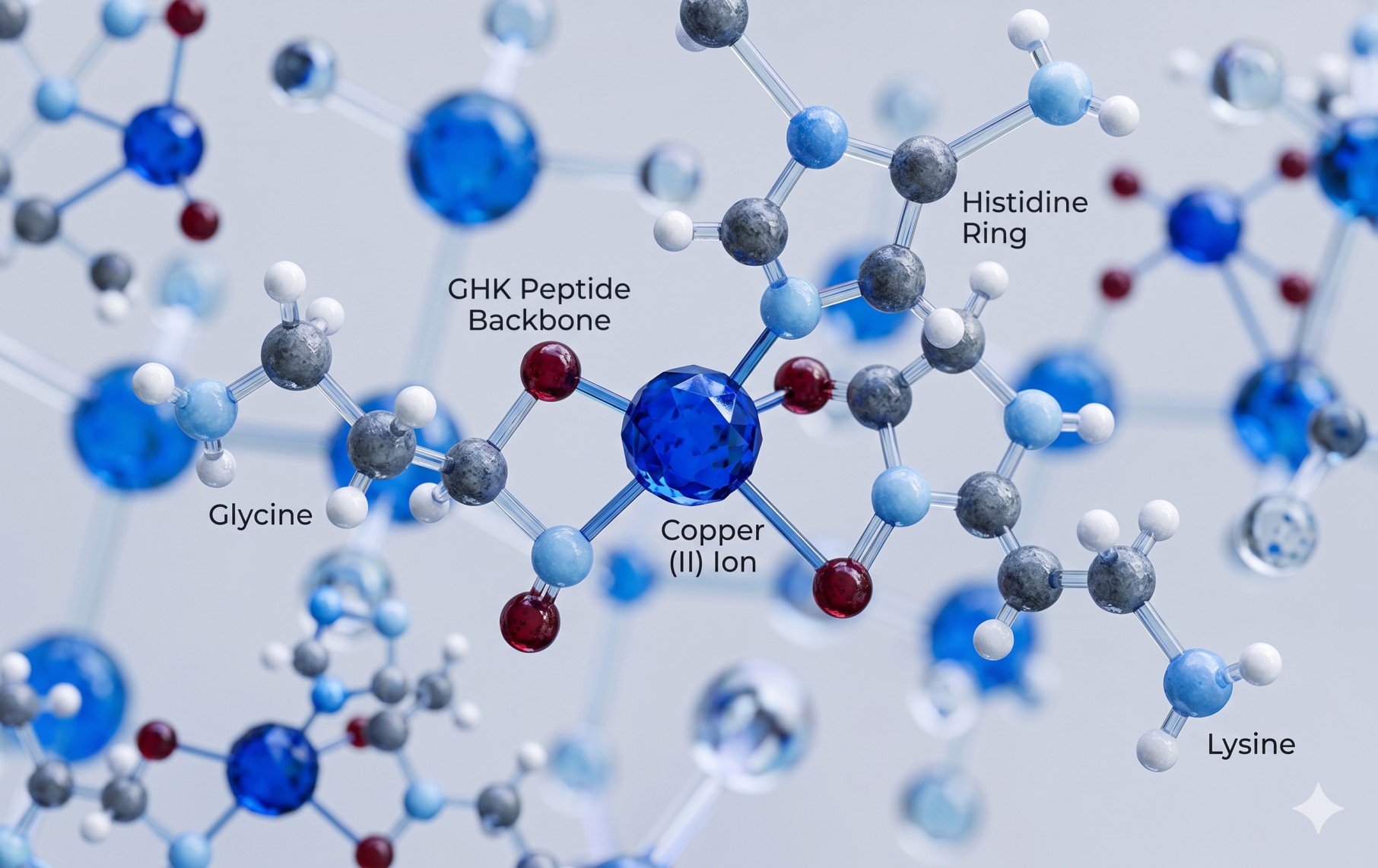
GHK-Cu (glycyl-L-histidyl-L-lysine-copper) is a naturally occurring copper peptide found in the body. Its levels decrease with age, which may contribute to slower healing and loss of skin firmness.
Researchers have found that GHK-Cu can stimulate collagen, reduce inflammation, and support tissue repair, making it one of the most studied peptides in regenerative research.
Key Research Areas
1. Skin & Anti-Aging
Studies show GHK-Cu can improve skin elasticity, reduce wrinkles, and increase collagen and elastin production. It’s widely used in cosmetic formulas and wound-care research for its ability to promote skin renewal.
2. Hair Growth
Copper peptides may help stimulate hair follicles, improve scalp circulation, and extend the growth phase of hair. Most research so far involves topical or lab-based studies.
3. Wound Healing & Inflammation
GHK-Cu has shown the ability to speed up wound healing, reduce scarring, and calm inflammation in animal and cell models. Some studies even suggest neuroprotective and anti-inflammatory effects beyond skin repair.
Delivery & Safety
Topical GHK-Cu is considered safe and well tolerated in human studies. Researchers are developing new delivery systems — like liposomes and hydrogels — to improve absorption. Injectable or oral forms remain experimental and are for research use only.
The Bottom Line
Current GHK-Cu peptide research supports its potential in skin rejuvenation, wound healing, and hair growth. While early results are strong, more large-scale human trials are needed to confirm its broader medical uses.
References
- Pickart, L., & Margolina, A. (2018). Regenerative and protective actions of the GHK-Cu peptide. Int. J. Mol. Sci., 19(7), 1987.
- Park, K. Y., et al. (2015). Copper peptide GHK-Cu in skin care and dermatology. J. Cosmetic Dermatol., 14(4), 291–295.
- Canapp, S. O., et al. (2003). Effect of GHK-Cu on wound healing in dogs. Veterinary Surgery, 32(1), 37–42.
- Abdel-Maged, M., et al. (2025). GHK-Cu ameliorates experimental colitis through SIRT1/STAT3 signaling. Front. Pharmacol., 16, 1553875.
Disclaimer:
This content is for educational purposes only. GHK-Cu and other research peptides are not approved for human use.