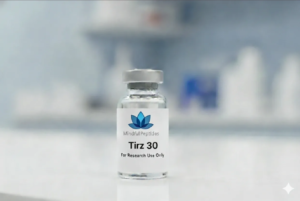

The peptide landscape is evolving fast, and scientists continue to explore new compounds with promising potential in cellular, metabolic, and cosmetic research. If you’re following the latest innovations in the research peptide world, several emerging options are starting to generate attention for what they may offer in controlled laboratory settings.
Below is a breakdown of the top up-and-coming peptides being studied in 2025—perfect for researchers, lab professionals, and science enthusiasts who want to stay ahead of the curve.
1. MOTS-c: A Mitochondria-Derived Peptide With Big Potential
MOTS-c has been trending heavily in the scientific community. It’s a peptide produced naturally in mitochondria and is being examined for its role in:
- Metabolic regulation
- Cellular stress response
- Exercise-related pathways
Its unique origin (mitochondrial DNA) makes it particularly interesting for researchers studying metabolism, cellular performance, and aging pathways.
2. FOXO4-DRI: A Senolytic Peptide in Early Research
Researchers are exploring FOXO4-DRI for its senolytic-like activity in controlled, experimental environments. Senolytics are compounds that target senescent (aged) cells, and FOXO4-DRI is at the center of cutting-edge studies on:
- Cellular aging
- DNA damage response
- Longevity science
While still at an early stage, FOXO4-DRI has become one of the most discussed peptides in longevity research laboratories.
3. Humanin: Another Mitochondrial Peptide Getting Renewed Interest
Like MOTS-c, Humanin is a mitochondrial-derived peptide being investigated for its potential interactions with:
- Cellular stress mechanisms
- Mitochondrial health
- Neuroprotective pathways
Humanin has been known for years, but recent interest has surged due to new studies and improved synthesis methods.
4. BPC-157 Analogues: Next-Gen Variants for Lab Study
BPC-157 has long been a staple in research, but what’s trending now are second-generation analogues designed to explore different stability and binding properties in vitro.
These analogues are being evaluated for potential improvements in:
- Molecular stability
- Tissue-specific activity
- Lab-controlled cellular studies
Expect to see more academic interest in BPC-related peptides throughout 2026
see our peptides, they are 99% pure and Lab tested
5. P21 Peptide: Cognitive Research Spotlight
A lesser-known but rapidly emerging peptide is P21, which is being studied for possible interactions with:
- BDNF (brain-derived neurotrophic factor) pathways
- Learning and memory processes
- Long-term neural plasticity
This peptide is gaining popularity among researchers studying nootropic-related biochemical pathways.
6. ARA-290 (Cibinetide): Inflammatory Pathway Research
ARA-290, also called Cibinetide, is being investigated for its possible effects on the body’s erythropoietin receptor pathways without triggering erythropoiesis. Researchers are studying it for potential roles in:
- Inflammatory signaling
- Cellular recovery pathways
- Immune modulation
Its clean profile and targeted mechanism make it an exciting molecule in ongoing laboratory work.
7. DSIP Analogues: Sleep-Related Peptide Research
Delta Sleep-Inducing Peptide (DSIP) and its analogues have resurfaced as researchers revisit their possible involvement in:
- Circadian rhythm biology
- Stress response
- Neurochemical regulation
Although early research is mixed, improved analogues are creating new academic interest.
Final Thoughts
The peptide research world is expanding faster than ever. From mitochondrial peptides like MOTS-c and Humanin to cutting-edge laboratory compounds like FOXO4-DRI, P21, and ARA-290, 2026 is shaping up to be a landmark year for peptide science.
If you’re looking for high-quality, lab-tested research peptides, ensuring purity and consistency is essential. At Mindful Peptides, we provide rigorously tested compounds for laboratory and educational use only, helping researchers explore the next frontier of peptide science safely and responsibly